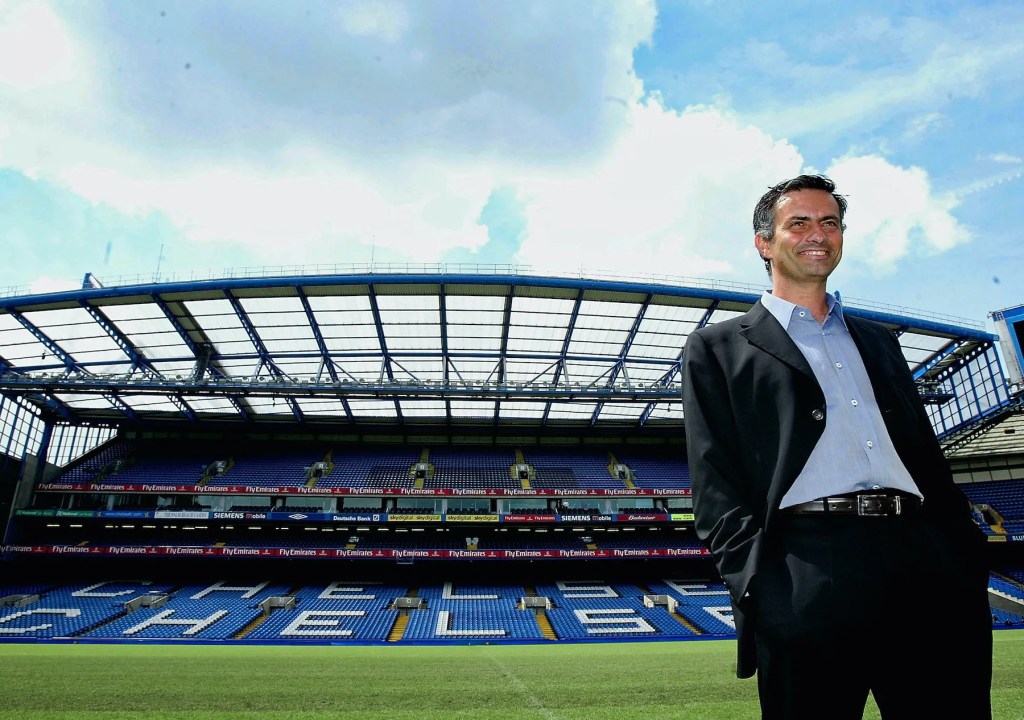
The 2004/2005 Premier League season marked a watershed moment in English football, with José Mourinho at the helm of Chelsea. Fresh from his success with FC Porto, where he had clinched the UEFA Champions League, Mourinho brought a wave of confidence and a tactical revolution to Stamford Bridge. His first full season in charge would etch his name into the annals of football history as he transformed Chelsea into a formidable force, redefining success in the Premier League.
A New Era Begins
Mourinho’s arrival was met with high expectations. Chelsea had invested heavily in the squad, acquiring players like Didier Drogba, who had joined from Marseille, and continuing to build on a strong foundation that included the likes of Frank Lampard and John Terry. Mourinho’s charismatic personality, combined with his tactical acumen, infused the team with an unshakeable confidence.
From the outset, the 2004/2005 season was a statement of intent. Chelsea began their campaign with a series of impressive performances, showcasing a solid defensive unit and an attacking prowess that would become hallmarks of Mourinho’s philosophy. The season’s opener saw Chelsea face Manchester United at Stamford Bridge, where they secured a 1-0 victory, signaling their intent to challenge for the title.
Defensive Masterclass
One of the most striking features of Mourinho’s Chelsea was their defensive solidity. The team conceded just 15 goals throughout the entire league season, a record that still stands today. This remarkable defensive record was built on the foundation of a robust backline led by captain John Terry, alongside the experienced Claude Makélélé, whose ability to shield the defense was crucial. Mourinho’s tactical setup prioritized organization and discipline, allowing Chelsea to control games and stifle opponents effectively.
Mourinho’s approach to the game was also marked by a pragmatic understanding of how to win. He often employed a counter-attacking style, utilizing the pace and power of players like Arjen Robben and Didier Drogba to exploit spaces left by opponents. This blend of defensive organization and rapid counter-attacks proved devastating, as Chelsea often overwhelmed teams both at home and away.
Midfield Mastery
In midfield, Frank Lampard emerged as one of the standout players of the season. His combination of technical skill, vision, and goal-scoring ability was pivotal. Lampard netted an impressive 13 goals in the league, often arriving late into the box to finish off moves. His partnership with Makelele and the creative flair of Joe Cole added depth and versatility to the midfield, enabling Chelsea to dominate possession and dictate the pace of games.
Mourinho’s tactical flexibility was another key aspect of the season. He adapted his strategies based on the opponents, often switching formations to maximize his squad’s strengths. Whether it was a 4-3-3 or a 4-4-2 setup, the players were drilled to understand their roles meticulously, leading to a cohesive unit that was difficult to break down.
Record-Breaking Success
As the season progressed, Chelsea’s dominance became evident. The team embarked on a 40-match unbeaten run in the league, culminating in a remarkable title-winning campaign. They secured the Premier League title with a month to spare, finishing the season with 95 points, 12 clear of second-placed Arsenal. This commanding performance not only sealed the title but also established Chelsea as a force in English football.
Mourinho’s first season at Chelsea was characterized by several memorable matches that highlighted their strength. The 4-2 victory against Tottenham Hotspur showcased their attacking flair, while the 1-0 win against Manchester United in the League Cup final further emphasized their growing dominance in English football.
The Legacy of Mourinho’s Chelsea
Beyond the statistics and records, Mourinho’s 2004/2005 season laid the groundwork for Chelsea’s future success. It was a season that not only introduced a winning mentality to the club but also transformed the expectations of what could be achieved in the Premier League. Mourinho’s emphasis on professionalism, discipline, and tactical intelligence became a blueprint for success, influencing managers and teams in England and beyond.
The impact of this season resonated beyond the trophy cabinet; it changed the landscape of English football. Chelsea’s dominance under Mourinho ushered in an era where financial backing and a strong managerial vision could lead to sustained success. Other clubs took notice, and soon, the Premier League became a hotbed of investment and tactical innovation.
Conclusion
In retrospect, José Mourinho’s first season at Chelsea was not just about winning the Premier League; it was a transformative period that defined a new era in English football. The 2004/2005 season stands as a testament to Mourinho’s managerial genius, the emergence of a new footballing philosophy, and the rise of Chelsea as a powerhouse. It set a precedent that echoed through the years, shaping the future of the Premier League and establishing a legacy that remains influential to this day.
 PremierLeagueNow