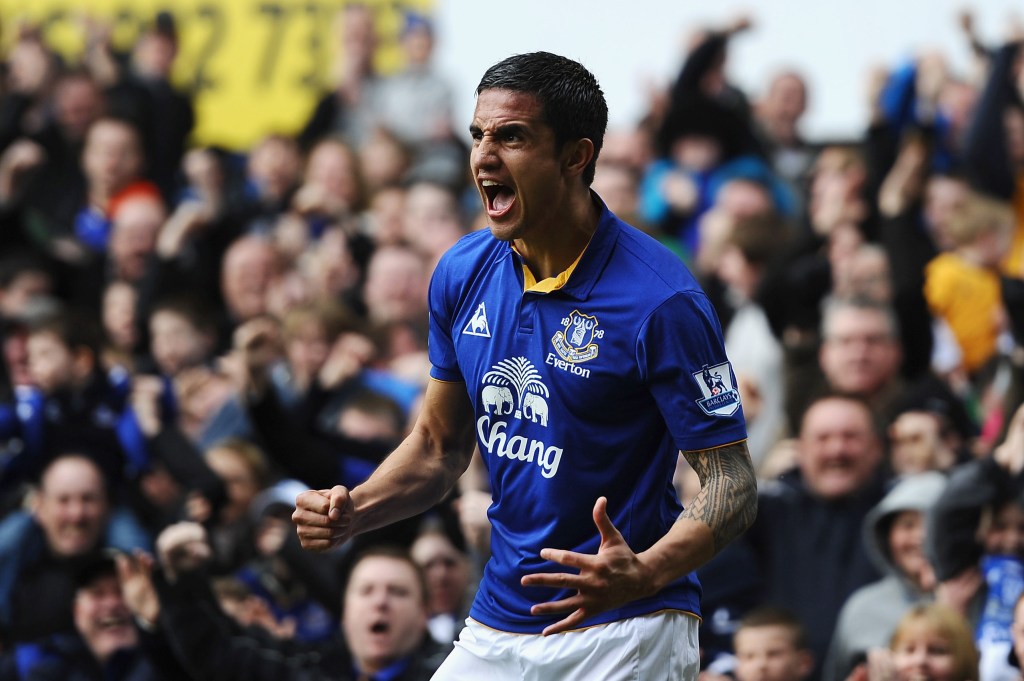
Passion for football can ignite a journey that leads to unexpected triumphs, and for Australian icon Tim Cahill, it was this very passion, combined with a defiant spirit, that propelled him from the parks of Sydney to Premier League stardom. His story is not just one of talent but of perseverance, grit, and an unyielding desire to prove doubters wrong.
Tim Cahill was born in Sydney, Australia, to an English father and Samoan mother. His father, Tim Cahill Snr., was a football enthusiast, and it was from him that Cahill first developed a love for the sport. Growing up as the middle child in a family of three sons, Cahill idolized his father, who would often take the family to local parks for intense football sessions. Cahill Sr. believed in the importance of hard work and taught his sons to value practice over natural ability. One of his father’s quirks was making his sons play without their right boots to force them to become proficient with their left feet, a lesson that would pay off as Cahill honed his skills.
However, Cahill’s path to professional football was anything but smooth. At school, his love for football was discouraged. Bexley North Public School, where Cahill attended, had a strong emphasis on rugby league, and the school failed to provide basic football equipment. Despite his father’s attempts to push football into the curriculum, the school refused to accommodate him. Instead, Cahill had to seek out local teams, playing on Sundays to keep his football aspirations alive.
Cahill’s early trials were marked by rejection. His first attempt at joining a semi-professional club, Sydney Olympic, was met with the harsh feedback that he was too small and not fast enough to succeed in professional football. Far from disheartening him, this rejection fueled Cahill’s resolve to prove the coach wrong. His determination only grew stronger, and within a few years, he received an unexpected call from the Samoan Football Association. At just 14, Cahill was invited to participate in an under-20 international tournament, marking his first step toward a professional football career.
His hard work began to pay off when he was eventually signed by Sydney Olympic, where his technical skills, particularly his ability to use both feet and his sharp positioning in the box, set him apart. His ability to read the game and arrive in the right place at the right time earned him a move further up the field, from a deeper midfield position to a more attacking role. In 1997, Cahill signed for Sydney United, but by then, his ambition had grown beyond Australia’s domestic league. Watching the Premier League on television with his father, Cahill set his sights on English football.
With his heart set on playing in the Premier League, Cahill’s parents made the ultimate sacrifice, taking out a loan to support their son’s dreams. Armed with his father’s limited contacts, Cahill was able to arrange trials with two English clubs—Millwall and Nottingham Forest. Despite being physically smaller than many of the other players, Cahill was confident in his abilities. When he arrived at Millwall, he faced the daunting challenge of fitting into a new culture, living alone, and adjusting to the tough, physical nature of English football. Millwall’s notoriously aggressive defenders and the cold, unfamiliar weather were far from the sunny parks of Sydney, and Cahill struggled in the beginning. There were times when he would call home in tears, overwhelmed by the challenges. But his parents, having sacrificed so much to give him this opportunity, offered him tough love and encouraged him to persevere.
Cahill’s persistence paid off when Millwall offered him a contract after just one trial. At 18, he was playing professional football in England, and he later recalled cleaning boots for £250 a week, feeling like a millionaire. His hard work and determination had already made him feel as though he had reached the pinnacle, even if he hadn’t yet played a single top-flight game.
His rise at Millwall was swift. By 1998, Cahill had debuted for the first team and played a key role in helping the club reach the 1999 Football League Trophy final. He continued to impress in the early 2000s, securing promotion from the old Second Division and making two playoff semi-finals. However, it was the 2004 FA Cup that would truly thrust Cahill into the limelight. Millwall, against all odds, had made it to the semi-finals, and in the 2004 FA Cup match against Sunderland, Cahill scored a crucial goal that sent Millwall to Wembley. The goal, scored at Old Trafford, was a moment of sheer composure, as Cahill slotted the ball past the Sunderland goalkeeper to seal Millwall’s place in the final.
After his brilliant performance in the FA Cup, Cahill caught the attention of Premier League clubs, and it was David Moyes’ Everton who secured his signature in the summer of 2004 for £1.5 million. This marked the beginning of Cahill’s Premier League journey, which would cement his status as one of Australia’s greatest footballers. At Everton, Cahill quickly became a fan favorite, known for his ability to score crucial goals, his work rate, and his leadership on the field. He went on to become the Premier League’s top scorer for Everton in multiple seasons and made a lasting impact in the Merseyside derby against Liverpool, where he holds the record for the most goals scored against their fierce rivals.
Cahill’s international career was equally remarkable, becoming Australia’s top international goalscorer and representing the Socceroos in three World Cups. His ability to rise to the occasion on the global stage, including scoring key goals in World Cup matches, made him an icon for both club and country.
Today, Tim Cahill is widely regarded as one of Australia’s greatest football players. His story is a testament to the power of perseverance, determination, and passion in overcoming obstacles and achieving greatness. Not only has he left an indelible mark on the Premier League, but he has also helped change the landscape of Australian football, inspiring a new generation of players and fostering the sport’s growth in his homeland. Cahill’s legacy endures not just in his footballing achievements but also in the impact he’s had on the sport in Australia, where football is now the most participated team sport. Through his academy, Foxtel All-Stars, he continues to inspire and nurture the next generation of Australian footballers, ensuring his legacy lives on long after he’s hung up his boots.

 PremierLeagueNow
Leave a comment