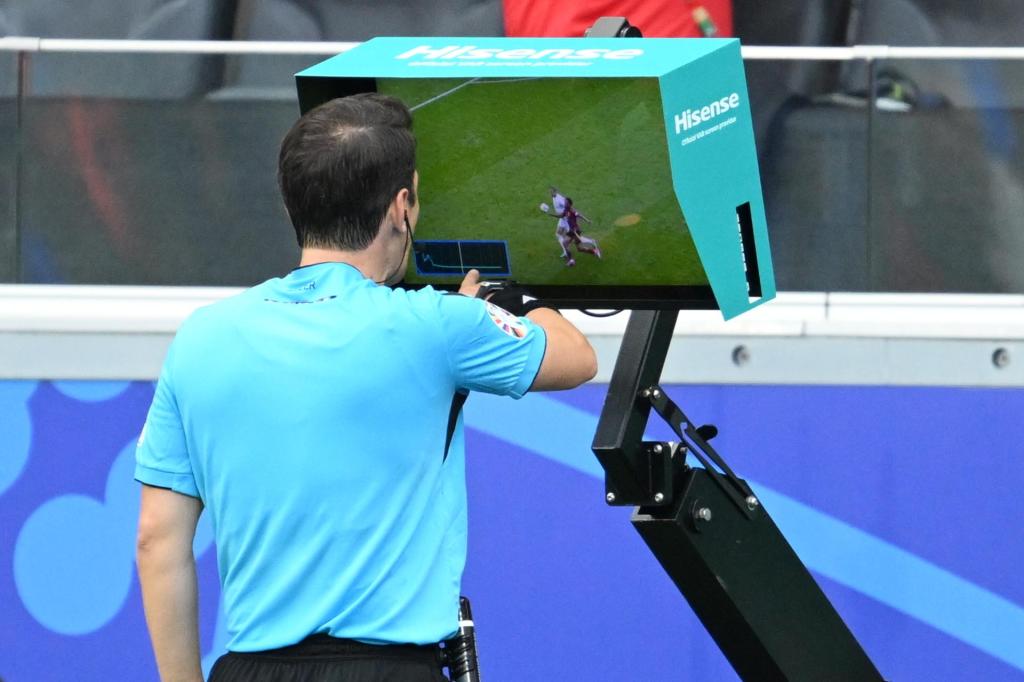
When VAR (Video Assistant Referee) was introduced to football, it promised fairness, accuracy, and the end of controversial decisions. Fast forward to today, and while VAR has certainly changed the game, it’s also sparked endless debate. Fans, players, and pundits still argue about interpretations, delays, and consistency.
But technology never stands still — and football’s digital revolution is just beginning. By 2030, the way we experience, officiate, and even feel the game could be transformed. So what does the future of VAR and football tech look like?
1. Instant, AI-Assisted Decision-Making
Right now, one of the biggest frustrations with VAR is the delay. Goals are celebrated, then paused. Fans are left waiting as officials draw pixel-perfect lines across TV screens. But by 2030, that wait might be a relic of the past.
Artificial Intelligence is already being tested in sports officiating — from offside detection to handball recognition. The semi-automated offside system used at the 2022 World Cup was just the beginning. By the end of this decade, we could see fully AI-powered systems that flag offsides or fouls instantly.
Instead of human officials analyzing angles and slow-motion replays, AI could automatically process real-time data from dozens of cameras, delivering decisions in seconds. The referee’s earpiece might simply announce: “Offside confirmed — margin 2.3cm.”
That doesn’t mean humans will disappear — referees will still oversee context and intent — but technology will handle the tedious, technical calls. The game could flow faster, fairer, and with less frustration.
2. Microchip-Embedded Balls and Wearables
If you thought goal-line technology was clever, the next step will blow your mind. FIFA and major leagues are already experimenting with microchip-embedded footballs that track movement, spin, and contact.
By 2030, these “smart balls” could communicate directly with VAR systems, instantly verifying whether the ball has been touched by a player’s hand, crossed the line, or deflected off a defender.
Paired with wearable sensors in players’ kits — measuring body position, speed, and even muscle strain — referees could have a 3D, data-rich view of every moment.
Imagine this: instead of manually checking for a handball, VAR receives a signal from the ball’s chip confirming exact point of contact. Or, when determining an offside, sensors in players’ boots automatically transmit position data accurate to a millimeter.
Such technology could remove the need for drawn lines or guesswork entirely. Referees would get data-verified calls instantly, reducing controversy and human error.
3. Augmented Reality (AR) for Fans and Officials
VAR’s biggest issue isn’t just accuracy — it’s transparency. Fans often feel disconnected from the decision-making process. By 2030, that could change through augmented reality (AR) integration.
Imagine sitting in a stadium and, through AR glasses or a mobile app, seeing an overlay of the offside line on the pitch in real time. Or watching on TV as a holographic replay shows the foul from multiple angles with the referee’s explanations displayed live.
For referees, AR could provide real-time visual aids — for example, a referee’s wrist device or headset projecting a virtual offside line or highlighting the zone of contact in a tackle.
The result? A game that’s more transparent, more immersive, and far more connected to the fan experience.
4. VAR Transparency and Live Audio Feeds
One of the most frequent calls from players and fans is simple: “Let us hear what VAR is saying.”
By 2030, that’s likely to become reality. Major tournaments like the Women’s World Cup have already begun trialing live explanations of VAR decisions to the crowd, similar to rugby and American football.
Soon, fans might hear the full conversation between on-field referees and VAR officials — not just the final verdict. Broadcasting this dialogue would build trust, reduce conspiracy theories, and educate viewers on how decisions are made.
Even better, football could adopt a system similar to the NFL’s — referees announcing decisions via mic directly to the crowd. It would bring clarity and accountability, turning VAR from a mystery into a part of the match narrative.
5. Predictive Officiating and Data-Driven Fair Play
As technology gathers more data about movement, contact, and decision patterns, football could evolve towards predictive officiating — using algorithms to flag potential rule changes or bias before they even become issues.
For example, data might reveal that certain referees consistently interpret tackles differently in the same zones or that a particular rule leads to more controversy than clarity. AI analysis could recommend improvements to laws of the game or training methods for officials.
On the pitch, predictive analytics could also assist in identifying simulation — the dreaded dive. By analyzing speed, impact, and motion data, systems could automatically flag exaggerated falls or “soft contact” incidents. It wouldn’t eliminate human interpretation, but it would make it harder for players to deceive the system.
6. The Evolution of the Fan Experience
VAR and technology won’t just change officiating — they’ll change how fans consume football.
By 2030, viewers might have full control over their experience: switching between camera angles, accessing live VAR feeds, and reviewing replays on demand through smart TVs or AR devices. Stadiums could offer interactive screens allowing fans to see live data — ball speed, player fatigue, xG probabilities — in sync with the match.
For younger fans raised on instant information, this immersive experience will feel natural. For traditionalists, it might feel like too much — but it’s the future of fan engagement, blending sport with technology in real time.
7. The Balance Between Technology and Humanity
As football moves deeper into the digital age, one key question remains: how much technology is too much?
The beauty of the game has always been its human element — the debates, the imperfections, the emotional chaos. Technology should enhance, not sterilize, that spirit. By 2030, the challenge for football’s governing bodies won’t just be implementing tech — it’ll be maintaining authenticity.
VAR and AI can make football fairer, but they shouldn’t make it soulless. The best outcome is a system where decisions are faster, fairer, and clearer — yet the game still feels human.
Final Whistle
By 2030, football could look very different — not in how it’s played, but in how it’s experienced. From AI-powered VAR to smart balls, wearables, and AR-driven transparency, the game is heading toward a future where fairness and technology walk hand in hand.
But for all the futuristic innovation, one thing will never change: the roar of the crowd, the emotion of a goal, and the simple joy of arguing over decisions in the pub afterward.
Because no matter how advanced VAR becomes, football’s greatest feature will always be its imperfections.
 PremierLeagueNow
Leave a comment