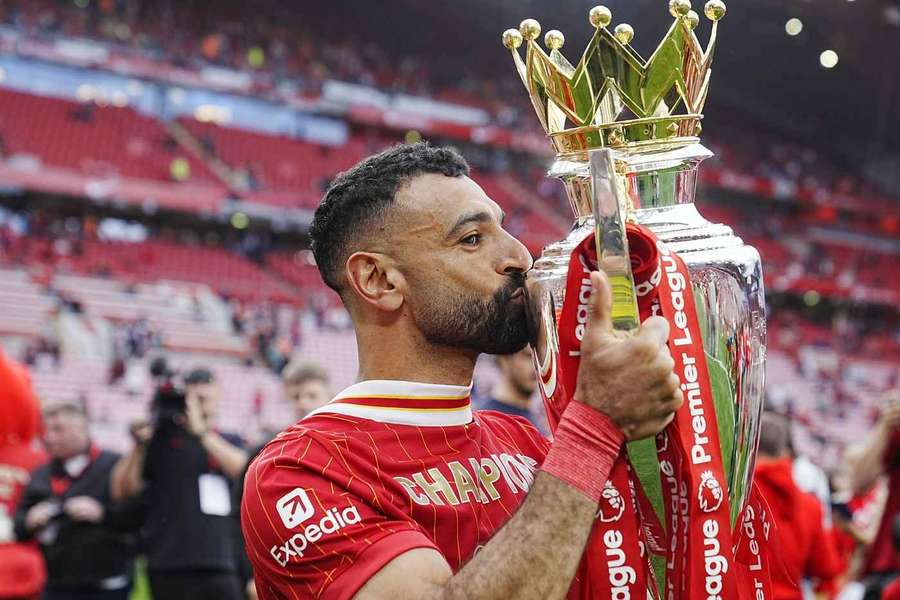
When the Premier League was launched in 1992, few could have predicted the transformation English football would undergo over the next two decades. What began as a breakaway by the country’s top-flight clubs seeking greater commercial opportunities became one of the most watched and influential sporting competitions on the planet. From tactical shifts and superstar players to global broadcasting deals and the rise of superclubs, the Premier League’s journey from its early years to the mid-2010s tells the story of football’s modernisation.
1992–1995: A New Beginning
The Premier League emerged from a desire to capitalise on the growing value of television rights. With Sky Sports investing heavily, English football entered a new era of presentation and professionalism. Yet on the pitch, the early years looked remarkably similar to the old First Division. Most clubs relied on direct, physical football, and English stars dominated team sheets. Stadiums, many of which had recently undergone upgrades following the Taylor Report, were becoming safer and more modern, but crowds were still smaller and less diverse than what the league would later enjoy.
Blackburn Rovers’ title triumph in 1994–95, backed by Jack Walker’s investment, hinted at a future in which financial power could reshape the league. But for now, the Premier League was still finding its identity.
Mid-1990s to Early 2000s: Foreign Influence and Tactical Revolution
The second major shift came with the influx of foreign talent—on the pitch and in the dugout. Eric Cantona, signed by Manchester United in 1992, quickly became the symbol of a new technical and creative influence. In 1996, Arsène Wenger arrived at Arsenal, introducing groundbreaking ideas about diet, conditioning, and continental-style football that would spread throughout the league.
The Premier League began shedding its reputation as tactically rigid. Passing football, more fluid formations, and a greater emphasis on athleticism emerged. Clubs increasingly scouted internationally, bringing in stars like Gianfranco Zola, Dennis Bergkamp, and Patrick Vieira, who raised the league’s technical level dramatically.
Manchester United dominated much of this era, collecting titles in 1993, 1994, 1996, 1997, 1999, and beyond. Their success, built on a mix of homegrown talent and smart recruitment, showcased what a well-run club could achieve amid the league’s growing competitiveness.
2000–2005: Global Expansion and a New Elite
By the turn of the millennium, the Premier League was no longer an English league with foreign players—it had become an international spectacle. Broadcasting deals expanded into Asia, Africa, and North America. Stadiums grew larger, commercial partnerships multiplied, and clubs increasingly saw themselves as global brands.
A seismic change occurred in 2003 when Roman Abramovich purchased Chelsea. The infusion of vast financial resources fundamentally altered the league’s landscape. Chelsea quickly transformed from perennial nearly-men into title challengers, winning the Premier League in 2004–05 and 2005–06 under José Mourinho. The Abramovich model—swift, ambitious, and aggressively well-funded—would foreshadow developments that reshaped football in the following decade.
Meanwhile, Arsenal’s 2003–04 “Invincibles” season provided one of the Premier League’s most enduring achievements: a full league campaign unbeaten. The rivalry between Arsenal and Manchester United defined the early 2000s with its blend of contrasting philosophies and fierce competition.
2005–2010: The Rise of the Big Four
By the mid-2000s, a clear elite group had emerged: Manchester United, Chelsea, Arsenal, and Liverpool. These teams consistently occupied the top positions and often made deep runs in European competitions. The 2007–08 season, featuring Cristiano Ronaldo’s extraordinary goalscoring exploits and Manchester United’s Champions League success, marked the Premier League at a new competitive peak.
Foreign investment grew further, and the league’s financial power increased with every broadcast cycle. Clubs were able to attract world-class players in their prime—not just those nearing the ends of their careers. The Premier League’s reputation for fast, intense football, combined with rich wages and global visibility, made it a destination for stars across Europe and South America.
2010–2015: Financial Power, Tactical Diversity, and Competitive Transformation
The early to mid-2010s represented another evolutionary leap. Manchester City’s 2008 takeover began paying dividends as the club built a title-winning side, claiming the Premier League in 2011–12 with the unforgettable last-minute Sergio Agüero goal. City’s rise challenged the Big Four era, introducing a new financial superpower and paving the way for a more open title race in later years.
Tactically, the Premier League embraced global influences more than ever. Managers like Roberto Martínez, Brendan Rodgers, and Manuel Pellegrini implemented possession-heavy systems, while others drew on German pressing principles. The league had become a melting pot of football philosophies.
This period also saw increased investment in youth development and facilities. Clubs built state-of-the-art training grounds, revamped academies, and embraced data-driven recruitment. The elite teams operated like modern corporations, combining global sponsorships with high-performance sporting models.
A League Transformed
By the mid-2010s, the Premier League scarcely resembled the competition that launched in 1992. It had grown from a largely domestic league into the world’s most commercially powerful football competition. Television rights had multiplied, clubs had evolved into global brands, and a wide international audience had embraced the sport.
On the pitch, the transformation was even more profound. English teams had become multinational projects with diverse tactics, world-class training methods, and some of the greatest footballers of their eras. The Premier League’s rise was not just about money, but about constant reinvention.
What began in 1992 as an experiment had, two decades later, redefined the global game.
 PremierLeagueNow
Leave a comment