When the Premier League was born in 1992, English football stepped into a new era of television money, international attention, and modernisation. Yet in the early years, many of the most iconic grounds still carried the character of the pre-Premier League era: tight stands, raw noise, unpredictable energy, and that unmistakable feeling that each stadium had a soul of its own.
These grounds didn’t just host football—they shaped it. They influenced matches, intimidated opponents, and created memories that defined the league’s first decade. Before modern all-seaters and bowl-shaped arenas became the norm, there were places where the atmosphere crackled in a way that simply couldn’t be replicated.
Here are the stadium atmospheres that helped define the early Premier League.
Highbury – The Home of Footballing Elegance
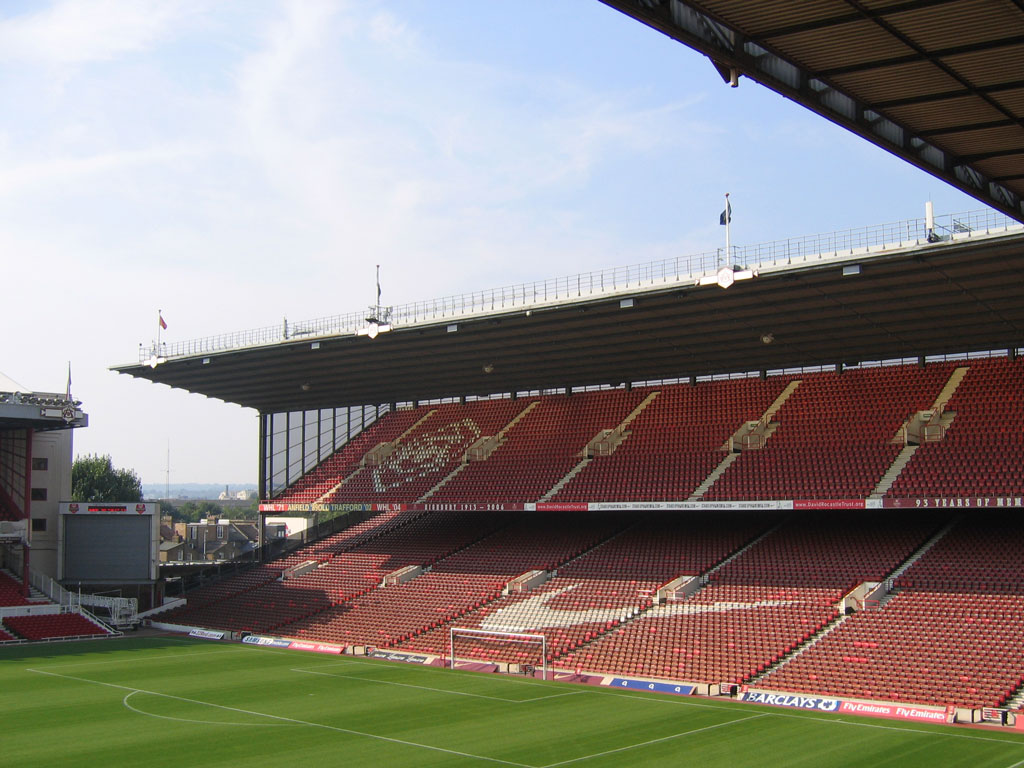
Arsenal’s Highbury was unlike anywhere else. Known as “The Home of Football,” it was a stadium steeped in tradition, style, and unmistakable character. Its art-deco façades and immaculate pitch gave it a sense of refinement, while its compact structure meant fans were close enough to practically whisper to the players.
Highbury wasn’t the loudest ground, but it had a different kind of electricity — a sharp intake of breath when the ball reached Dennis Bergkamp’s feet, a controlled intensity when Arsène Wenger’s early Arsenal sides zipped the ball around.
On big nights, however, Highbury could ignite. The North Bank, rebuilt in the early 1990s, carried much of the noise. What really made Highbury unique was how it amplified moments of technical brilliance. It felt like a theatre, one where the audience knew exactly when to gasp, applaud, or erupt.
When Arsenal left Highbury in 2006, the Premier League lost one of its most distinctive atmospheres — an arena where football felt close, pure, and effortlessly stylish.
The Dell – A Cauldron on the South Coast
If Highbury was elegance, The Dell was chaos. Southampton’s former home was famously cramped, asymmetric, and utterly hostile for visiting teams. With stands squeezed tightly around a pitch that always felt slightly too small, The Dell generated noise like few other grounds.
Fans were right on top of players, and the quirky geometry of the stadium only heightened the sense of unpredictability. Corners and throw-ins looked like they were being taken from someone’s back garden.
Many teams, especially those used to sweeping pitches and wide-open flanks, struggled at The Dell. Southampton often thrived on that discomfort, pulling opponents into frantic, frantic contests decided by sheer intensity.
Under the floodlights, when the crowd pressed in from every angle, The Dell felt like a different sport altogether — a uniquely Premier League brand of organised chaos.
Anfield – Raw Emotion and Relentless Energy
Even in the early Premier League era, Anfield already carried a reputation larger than the stadium itself. The home of Liverpool had decades of European nights behind it, and while the club’s dominance dipped in the 1990s, the atmosphere rarely did.
The Kop, stretching behind one goal, remained one of the most iconic single stands in world football. Long before all-seater regulations changed its structure, the standing Kop had been a mass of swaying humanity. In the 1990s, even seated, it kept its voice — and its bite.
Anfield during tight games could be suffocatingly loud. Visiting teams often spoke about how quickly momentum could shift there, how the crowd could lift Liverpool through tough spells or spark sudden revivals. The Premier League’s early years were filled with matches in which a previously flat Liverpool suddenly surged forward, carried by a chorus that seemed to arrive from nowhere.
Anfield demonstrated how emotion could shape a match — and how a single stand could give a club a competitive edge.
Elland Road – Fearless, Feverish, Uncompromising
Few grounds in the 1990s were as intimidating as Elland Road. Leeds United’s home was a cauldron of unapologetic noise, fuelled by a fanbase that thrived on intensity and confrontation.
Leeds’ teams of the early Premier League era — full of grit, aggression, and energy — suited the environment perfectly. Elland Road wasn’t polished, but it was loud, fierce, and fiercely loyal. When Leeds pressed high and tackled hard, the crowd responded with roars that pushed the pace even higher.
Opposing teams often spoke of Elland Road as a place where you had to win individual battles before you could even think about football. The atmosphere demanded bravery, and those who lacked it were swallowed whole.
St. James’ Park – A City Lifted Into the Sky
Another early Premier League atmosphere defined not just a club, but an entire city. St. James’ Park rises steeply above Newcastle like a cathedral, and even in the 1990s — before its later expansions — it created a sense of spectacle unmatched elsewhere.
Newcastle fans, packed into the Gallowgate and Leazes ends, generated a booming wall of sound. Under Kevin Keegan in the mid-90s, when the “Entertainers” attacked with fearless abandon, the stadium felt alive. Goals weren’t just celebrated — they were detonated.
The emotional connection between club and city made St. James’ Park uniquely vibrant. Win, lose, or draw, the noise rarely dipped. It was the soundtrack of a one-club town, a fanbase pouring everything into every match.
Filbert Street, Upton Park, and Other Lost Gems
The early Premier League also featured several atmospheric grounds that no longer exist:
- Upton Park: Tight, fierce, and unfiltered — West Ham’s spiritual home.
- Filbert Street: Leicester’s old ground, full of charm and claustrophobic energy.
- Maine Road: Manchester City’s noisy, sprawling, unpredictable former home.
- Roker Park (in the final pre-PL era years): A ground of old-school roar and character.
Each added something different to the league’s early identity.
A Lost Era — But Not Forgotten
Today’s Premier League stadiums are modern, impressive, and comfortable. But something intangible was lost when those old grounds disappeared. The early Premier League was shaped by places where rust met passion, where supporters stood almost within touching distance of the pitch, and where every home match felt like a unique event.
These atmospheres didn’t just provide a backdrop — they were characters in the league’s story. And for many fans, they remain irreplaceable.
 PremierLeagueNow
Leave a comment