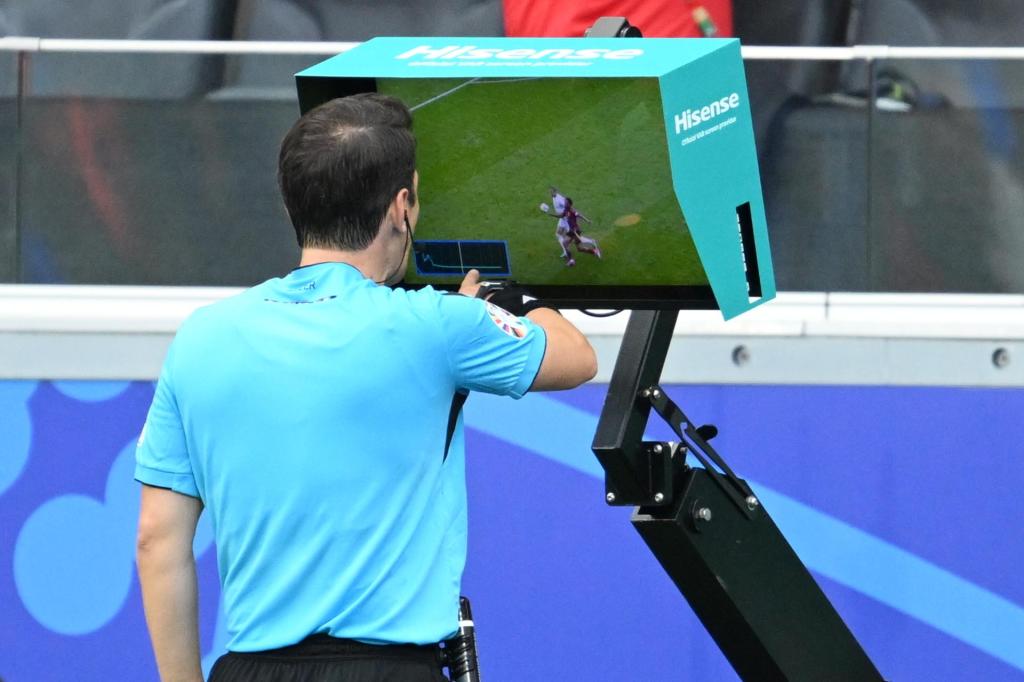
Ever since its controversial introduction in 2019, VAR has shaped Premier League football in ways few could have imagined. But the 2025/26 season marks a significant turning point: new technologies, updated protocols, and fresh refereeing guidelines have pushed the Video Assistant Referee system into its most transformative—and divisive—era yet.
While some believe VAR has finally begun delivering the fairness it has always promised, others argue the Premier League has become more chaotic than ever. So which side is right? Let’s break down the biggest changes, controversies, and consequences of VAR this season.
Smarter Tech, Faster Decisions—At Least on Paper
One of the Premier League’s most ambitious goals for 2025/26 was reducing the long delays that have frustrated fans and players for years. A major technological overhaul arrived before the season kicked off:
• Automated offside lines using semi-automated tracking
The system, already used in European competitions, quickly identifies attackers’ positions based on limb-tracking technology. This has cut the average offside decision down to under 20 seconds.
• Improved communication between VAR rooms and the on-pitch referee
Officials can now rely on more streamlined audio protocols, eliminating the long pauses and confusion that plagued earlier seasons.
• Additional camera angles installed across all 20 stadiums
This includes enhanced goal-line angles and high-frame-rate cameras to assess touches, fouls, and handball situations more accurately.
On paper, this should have made 2025/26 the season VAR finally “clicked” into place. And in some ways, it has: delays are shorter, clear offsides are resolved quickly, and fewer decisions hinge on blurry replays.
But as always with VAR, solving one problem often creates another.
The Rise of Micro-Decisions and the New Chaos
While offsides have become faster, subjective calls have become more scrutinised than ever. High-definition, slow-motion replays give referees extreme precision, but they can also distort the real speed and intensity of challenges.
This season, Premier League fans have seen:
- More penalties awarded for small shirt pulls
- More goals overturned due to minimal contact in the buildup
- More red cards reviewed and upgraded
- More stoppages for minor handball checks
The paradox is clear: technology has become too precise.
A slight tug spotted in a freeze-frame may look like a foul, even if it had little effect in real time. A striker brushing against a defender in the build-up to a goal may now cancel out a brilliant move. Many fans argue that football is a game of physical duels, not forensic analysis—and 2025/26’s VAR system often feels like it forgets that.
Chaos hasn’t disappeared. It has simply changed shape.
Transparency vs. Controversy: Are Fans Actually Happier?
One of the Premier League’s boldest moves this season was increasing transparency by making referees’ VAR conversations available after matches. While the audio isn’t played live, fans can hear explanations for key decisions in post-match packages.
The idea was to build trust. In practice, it has sparked new debates:
- Some praise the honesty and clarity.
- Others claim it exposes inconsistent reasoning between different officials.
- Managers often use the audio to fuel post-match complaints.
And while transparency is a step forward, it doesn’t erase the emotional frustration when decisions go against a team. Supporters rarely want clarity—they want the call to favour their club.
Has VAR Actually Made the League Fairer?
When assessing fairness, it’s important to separate accuracy from impact. By raw data, VAR is getting more decisions right:
- Fewer incorrect offsides
- More accurate penalty calls
- More appropriate card upgrades or downgrades
But accuracy alone doesn’t guarantee a better football experience.
Fairness improved?
Yes—fewer goals stand that should have been ruled out, and dangerous challenges are spotted more consistently.
Game flow disrupted less?
Partially—offside calls are quicker, but subjective reviews are increasing.
Is football more enjoyable?
Depends who you ask.
For supporters who value correctness above all else, this season’s VAR feels like a step forward. But for fans who miss the raw flow and emotion of a pre-VAR Premier League, the growing number of stoppages and micro-decisions feels suffocating.
Managers Are Adapting Their Tactics Because of VAR
One underrated storyline is how VAR is influencing tactical behaviour:
• Defenders are pulling less and tackling differently
Knowing every small touch might be reviewed makes defenders more cautious.
• Attackers are encouraged to stay on their feet or exaggerate contact
Both can work to their advantage depending on how VAR interprets the incident.
• Set-piece routines are becoming more disciplined
Clumsy blocks, grappling, and off-the-ball movements are far more likely to be punished.
VAR is no longer simply checking decisions—it’s shaping how the game is played.
The Big Question: Fairer or More Chaotic?
The honest conclusion is that the 2025/26 VAR landscape is both.
Fairer because:
- Technology reduces clear errors
- Offside decisions are quicker and more accurate
- Dangerous fouls are identified reliably
- Transparency builds trust
More chaotic because:
- Micro-decisions slow the game
- Subjective calls still divide fans
- Managers and players are constantly adjusting to new interpretations
- The emotional experience of celebrating goals has changed forever
VAR hasn’t ruined football, nor has it perfected it. It has transformed it.
Final Verdict
The Premier League of 2025/26 is a hybrid era—part traditional football, part technological innovation. VAR has unquestionably made refereeing more accurate, but it has also introduced new layers of complexity and controversy.
Whether the league becomes fairer or more chaotic in the long-term will depend on one thing: how well the technology is balanced with the spirit of the game.
For now, one truth remains clear: VAR is here to stay, and its influence on Premier League football has never been greater.
 PremierLeagueNow
Leave a comment