In the Premier League, every goal counts — literally. While wins and losses may steal the headlines, it’s often the fine margins that make history. One of the most thrilling and ruthless tie-breakers in football is goal difference — the net total of goals scored minus goals conceded across a season. And in the Premier League era, goal difference has played a critical role in shaping title races, relegation battles, and European qualification.
Let’s take a look back at the moments when goal difference decided everything — from triumph to heartbreak.
1. The Most Iconic: Manchester City vs. Manchester United (2011–12)
Title decided on goal difference
There’s no more famous example of goal difference deciding the Premier League title than the 2011–12 season. Manchester City and Manchester United finished the campaign level on 89 points — but it was City who lifted the trophy thanks to a superior goal difference (+64 to United’s +56).
But what made this moment iconic was how it unfolded.
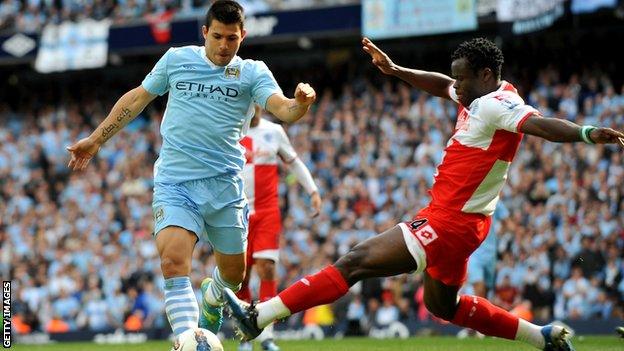
City went into the final day needing a win over QPR to secure the title. At one point, they were 2-1 down, and United — already finished with a 1-0 win at Sunderland — thought the title was theirs. Then came those two injury-time goals: Edin Džeko in the 92nd minute, followed by Sergio Agüero’s legendary winner in the 94th.
The stadium erupted, Martin Tyler’s “Agüerooo!” became etched in football history, and goal difference became the fine line between glory and despair.
2. The Great Escape: West Bromwich Albion (2004–05)
Relegation avoided by the narrowest of margins
The 2004–05 relegation battle was one of the tightest in Premier League history. Going into the final day, all three relegation spots were still up for grabs, with West Brom, Southampton, Crystal Palace, and Norwich all in the mix.
West Brom, bottom of the table at the start of the day, pulled off a 2-0 win over Portsmouth. Norwich were thrashed 6-0 by Fulham, and Palace only drew. The final standings saw West Brom finish 17th — just one point above the drop — but crucially, goal difference played a role in how the other teams were ranked below them.
Had West Brom conceded one more or scored one less in previous weeks, history could have been different. It was the first time a club had survived relegation from the bottom on Christmas Day — by the slimmest of margins.
3. Arsenal vs. Tottenham: Battle for Fourth (2012–13)
Champions League qualification comes down to the wire
The North London rivalry reached peak tension in the 2012–13 season, with both Arsenal and Tottenham battling for fourth place — and a spot in the Champions League. Arsenal held the edge going into the final day but only by a single point.
Arsène Wenger’s side narrowly beat Newcastle 1-0, while Spurs also won their match. The final table showed Arsenal on 73 points and Spurs on 72 — but it’s worth noting that had Arsenal drawn, they would have finished level on points but stayed ahead on goal difference (+35 vs. +20).
In a race this tight, even a late goal conceded in February or a missed chance in March could have swung things. Arsenal’s ability to keep clean sheets and rack up goals in the second half of the season ultimately made the difference.
4. Manchester United and Chelsea: Neck-and-Neck (2007–08)
Title race separated by goal difference — before the final day
In 2007–08, Manchester United and Chelsea pushed each other all the way. Heading into the final stretch, both teams were level on points, but United held a superior goal difference. When it came down to the last day, United beat Wigan 2-0 while Chelsea drew with Bolton, giving Sir Alex Ferguson’s side the title outright.
But had Chelsea managed a win and finished level on 87 points, United would still have taken the title on goal difference — a cushion they carefully built with several big wins that season, including 6-0 over Newcastle and 5-1 over Fulham.
5. Relegation Heartbreak: Hull City (2008–09)
Goal difference not enough to save them
Hull City’s debut Premier League season in 2008–09 started with promise but ended in survival by goal difference alone. They finished 17th on 35 points — level with Newcastle, who went down due to their inferior goal difference.
Hull’s -25 compared to Newcastle’s -19 meant that despite having worse defensive stats, they had scored more — enough to keep them up. It was a stark reminder for clubs near the bottom: even if you don’t win, losing by less can still be a victory in the end.
Why Goal Difference Matters So Much
In the Premier League, where the margins are razor-thin, goal difference serves as the ultimate tie-breaker. It doesn’t just reflect a team’s ability to win — it reveals consistency, dominance, and resilience across 38 matches. Whether it’s Manchester City racking up a +60 difference or a club like Burnley surviving with a -19, every goal scored (or prevented) can shift the fate of a season.
Teams have learned to keep one eye on the table and another on the ‘GD’ column — especially in the final weeks. It’s also why big teams push for more even when the match is “won.” In the long run, that 5th goal in a 5-0 win might be the one that tips the scales.
Final Thoughts
The Premier League is a game of inches and often, decimals. Goal difference may seem like just another stat in the table, but it has been the invisible hand shaping some of the league’s most unforgettable moments. From Agüero’s last-gasp heroics to clubs clawing their way out of relegation, these are the stories that prove: every goal really does matter.
So next time your team is 3-0 up and pushing for a fourth, remember — it’s not just about the win. It might just be about the title, survival, or European nights next season.

 PremierLeagueNow
Leave a comment